
Choosing the best Case Of Sunglasses in 2026 requires more than matching color with personal style. It requires practical judgment.
Grand View Research valued the global sunglasses market at approximately USD 19.66 billion in 2023. Its report projects a 4.7% compound annual growth rate from 2024 to 2030. This expansion reflects stronger interest in eye protection, premium materials, and everyday portability. However, a growing market does not guarantee better products.
The Vision Council’s Consumer inSights research continues to identify protection, comfort, and appearance as important eyewear priorities. A dependable case should protect lenses from scratches, frames from pressure, and hinges from unnecessary stress. Look for a firm shell, soft interior lining, secure closure, and enough space for your actual frames. A case that barely closes is not protective. It is a warning.
Optometrist Dr. Gary Heiting states, “Sunglasses are more than a fashion accessory.” That principle also applies to storage. A quality case supports the protective purpose of the sunglasses themselves. It should fit inside a work bag without collapsing, yet remain light enough for daily travel.
Materials matter, but design details matter more. Recycled fabric may sound responsible, while weak stitching can shorten the product’s life. This is where buyers need to think critically. Marketing language is not testing evidence.
This guide compares durability, portability, interior protection, closure systems, and value. It also considers real use, including crowded bags, hot cars, and hurried mornings. The best choice may not be the most expensive one. It should be the case you continue using.
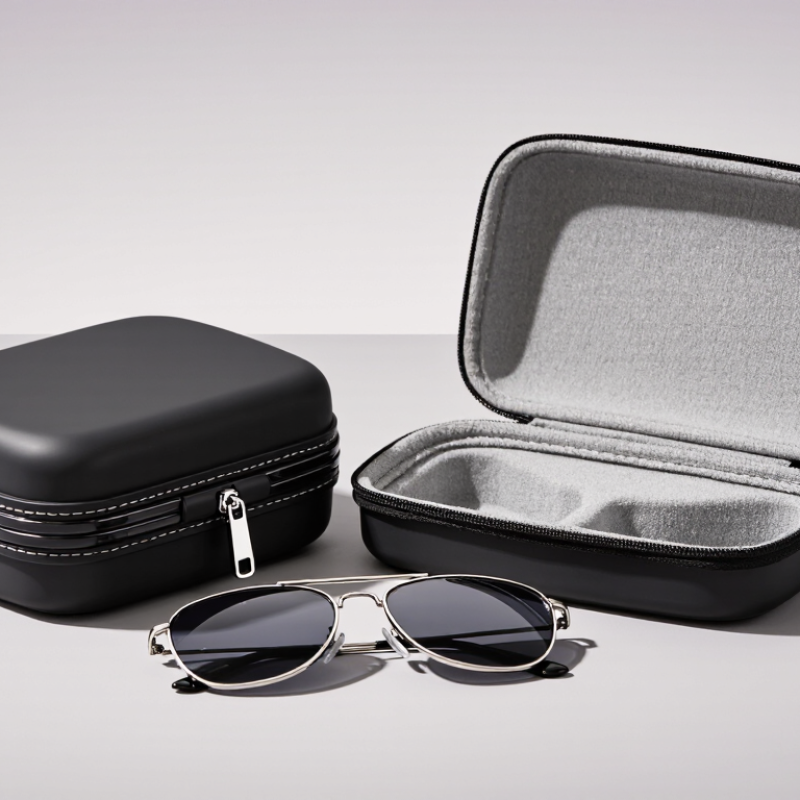
A good sunglasses case should match your daily routine, not only your glasses. Measure the frames before shopping, including their height, width, and curved temples. A case that looks compact may crush oversized frames.
Protection starts with structure. A firm outer shell helps resist pressure inside a backpack or drawer. Soft lining prevents small scratches when lenses move during travel. Check the hinge and closure, too. They should feel secure without requiring excessive force.
Material affects comfort and durability. Hard plastic offers reliable impact resistance, while fabric cases are lighter and easier to carry. Water-resistant surfaces can help during light rain, but they are not fully waterproof. That distinction matters.
I prefer cases with enough room for the frames without loose movement. However, extra space can make glasses slide and hit the walls. My earlier choice was too tight, despite its strong shell. I overlooked the hinge angle.
Keep cleaning practical. Removable dust or debris should not collect around the lenses. A smooth lining is easier to inspect and maintain. If the case smells strongly or sheds fibers, reconsider it. Small details become frustrating after weeks of use.
Your best choice depends on storage habits, frame shape, and protection needs. A stylish case is useful, but daily access matters more. Test the closure with one hand before buying. It should open smoothly and close completely.
A molded EVA or polycarbonate shell offers useful protection in crowded bags. EVA absorbs compression, while polycarbonate resists impacts. Add a smooth microfiber lining.
Choose a water-resistant nylon exterior with closed-cell foam padding. It helps limit moisture and pressure. Keep ventilation modest, because large openings invite dust.
Usually, no. Fabric-only pouches fold easily but provide limited crush and impact protection. They may suit calm office storage, not cycling or travel.
It can be enough for low-risk office storage. Recycled polyester or coated fabric saves space but offers less crush protection. Convenience can still cause regret.
A soft microfiber lining reduces friction, dust, and minor surface marks. It should feel smooth, not fuzzy or abrasive. Check that it stays attached.
A zipper provides dependable security, while a magnetic flap offers faster access. Test the closure with one hand. It should remain shut after a short desk fall.
Measure the frame length, height, and hinge width before buying. Oversized frames may press against the walls. A tight interior can damage lenses.
Rounded edges reduce clothing snags, and a cleaning-cloth pocket adds practicality. Very thin cases save space but often sacrifice impact protection. I once ignored a stiff hinge, and daily use became irritating.
Choosing the best sunglasses case in 2026 starts with understanding your daily routine, travel habits, and protection needs. A reliable Case Of Sunglasses should shield lenses from scratches, crushing, dust, and sudden temperature changes. Consider materials such as hard shells for maximum impact resistance, lightweight fabrics for portability, or water-resistant finishes for outdoor use. The case should also match the size and shape of your glasses without being too tight or leaving excessive room that allows movement.
Interior design is equally important, especially when soft lining, secure closures, and organized compartments help prevent damage. Features such as magnetic or zippered openings, compact storage, easy-clean surfaces, and attachment loops can improve everyday convenience and security. Finally, compare style, durability, and long-term value rather than focusing only on appearance or price. The ideal case combines practical protection, comfortable portability, dependable construction, and a design that suits your personal preferences throughout 2026.
