
How to Choose the Best Glasses Case for Your Needs?

Time:2026-10-08 Author:Oliver
0%

Choosing the right Glasses Case is a small decision with daily consequences. The World Health Organization’s World Report on Vision estimates that at least 2.2 billion people live with near or distance vision impairment. Many depend on corrective lenses every day. The Vision Council’s consumer research also reports that about 64% of U.S. adults wear eyeglasses. That makes basic lens protection more than a style detail.

Optician and eyewear-care educator Dr. Jennifer L. Stewart offers a practical principle: “Protection is part of vision care, not an afterthought.” A good Glasses Case should match your routine, not merely look attractive on a shelf. A hard shell suits crowded handbags and backpacks. A microfiber-lined interior helps reduce contact with dust and grit. A slim sleeve works for light travel, but it may not protect frames from pressure. No case is perfect.

Consider hinge strength, closure security, interior space, weight, and cleaning needs. Oversized cases can waste room. Tight cases may bend temples or press against lenses. Water-resistant materials sound useful, yet moisture trapped inside can create another problem. Industry forecasts from Grand View Research show continued growth in the global eyewear market, increasing the need for practical accessories and careful product selection. The best choice is not always the most expensive one. It is the case you will carry, close, and use consistently.
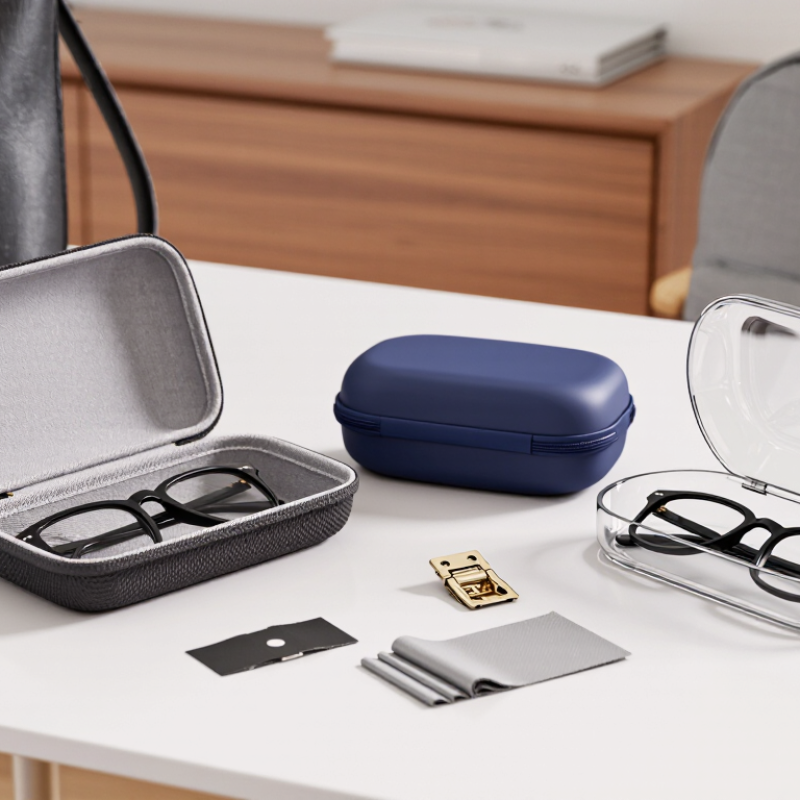
How to Choose the Best Glasses Case for Your Needs?

Define Frame, Lens, and Size Needs Before Comparing Case Dimensions

How to Choose the Best Glasses Case for Your Needs?

Before comparing case dimensions, define what your glasses require. Measure the frame’s widest point, total length, and height when folded. Include the bridge and temple hinges, which can add unexpected bulk. Large frames, thick temples, and flexible hinges often need extra interior clearance.

Lens details matter too. Prescription lenses may have added thickness, while high-curvature lenses need protection from pressure. Coated lenses can scratch when they rub against rough lining or loose objects. Choose a case with a soft, clean interior and enough depth to prevent contact with the shell. A microfiber pouch may help, but it should not replace a firm outer case for bags that receive daily knocks.

Measure twice. Then compare those measurements with the case’s usable interior, not its outside dimensions. Allow a small margin for easy removal, but avoid excessive space that lets the glasses slide around. I once chose a case that seemed compact and attractive; the frame fit, yet the hinge pressed against the lid. That small mistake made the case less protective.

Consider how you carry your glasses. A rigid case suits crowded backpacks, while a lighter case may work inside a tidy desk drawer. Check the closure, hinge strength, and lining by handling them directly when possible. Product measurements can be incomplete. Your real routine is the better test.

Use ANSI/ISEA Z87.1-2020 Impact Testing as a Protection Benchmark

Choosing a glasses case starts with understanding the protection your eyewear needs. A soft pouch may prevent scratches, but it rarely resists crushing or sharp impact. For safety glasses, ANSI/ISEA Z87.1-2020 offers a useful protection benchmark.

This standard focuses on protective eyewear performance, including impact resistance, lens durability, and coverage requirements. A glasses case is not automatically certified under this standard. However, you can ask whether its design supports similar impact protection. Look for a rigid shell, reinforced corners, secure hinges, and a closure that stays locked inside a work bag. The case should not flex when pressed by hand.

Check the interior carefully. Smooth fabric can reduce lens scratches, while raised edges keep lenses away from the shell. Leave enough space for side shields or adjustable temples. A case that fits too tightly may bend the frame during removal. That mistake is easy to make.

Ask the supplier for test evidence, not just phrases like “heavy duty.” Independent impact testing, documented materials, and clear use limits show stronger reliability. Still, no case protects against every hazard. I once preferred a compact case, but its narrow opening forced the frame against the zipper. Convenience was not protection. Your daily environment matters: a workshop, vehicle, or crowded backpack may require different levels of impact resistance. Inspect the case regularly for cracks, loose stitching, or a weakened latch. Replace it when protection becomes uncertain.

Check Materials Against ISO 12870:2016 Frame-Performance Requirements

How to Choose the Best Glasses Case for Your Needs?

ISO 12870:2016 sets requirements and test methods for spectacle frames, not glasses cases. This distinction matters when comparing case materials. A case should protect the frame from pressure, heat, moisture, and surface damage during daily use. These conditions relate to frame performance, including mechanical strength, dimensional stability, and resistance to perspiration.

A rigid case usually offers stronger impact protection than a soft pouch. Look for a firm outer shell, secure closure, and smooth inner lining. The lining should not pull against hinges or leave fine dust on the lenses. Materials with strong chemical odors deserve caution. Heat can also deform some plastics, especially inside a parked vehicle.

I once chose a slim case that looked practical, but its hinge pressed against the frame. It failed in a less obvious way.

Check whether the case leaves enough space around the bridge and temples. Crowding may place repeated stress on frame joints. A washable lining can help reduce sweat and skin-oil buildup. However, “anti-scratch” claims are not enough without test details. Ask how the material was evaluated, and whether testing reflects real use.

ISO 12870:2016 can guide questions about frame durability, but it does not certify case quality. That limitation is easy to miss. A careful choice combines verified material information, suitable dimensions, and honest attention to how the case will be carried.

Use WHO’s 2.2 Billion Figure (2019) to Prioritize Accessible Cases

Choosing the best glasses case starts with access, not appearance. In 2019, the World Health Organization reported that at least 2.2 billion people had vision impairment worldwide. That figure should influence how we judge everyday eyewear accessories. A case should be easy to find, open, and handle, especially for people with limited vision, reduced dexterity, or changing eyesight.

Look for high-contrast colors and a clear shape. A textured pull tab can help someone identify the opening by touch. Wide openings make it easier to place thick frames inside. A firm shell protects lenses from keys, coins, and pressure inside a bag. Lightweight construction also matters when the case is carried throughout the day. I once preferred a slim case, but it was difficult to open with one hand. I was wrong about what “convenient” meant.

Accessible design should not feel medical or complicated. Simple hinges, gentle closures, and enough room for different frame sizes can support more users. Avoid cases that require strong pinching or precise finger movements. Test the case while sitting, standing, and carrying a bag. Small details become important in real use. Very small details. Caregivers may also need to identify the case quickly, so a distinctive texture or color can help. WHO data provides important context, but it does not describe every person’s needs. Personal testing still matters.

Test Fit, Closure, Cleaning, and Durability Through Repeated Daily Use

How to Choose the Best Glasses Case for Your Needs?

A glasses case should fit your routine, not only your frames. I test the fit by placing the glasses inside without forcing the temples or lenses. The case should close easily, yet prevent movement when shaken gently. A loose fit can cause scratches from repeated contact. A tight fit may bend the frame over time. It should not. That matters.

Use the closure several times each day. Open it with one hand, place it in a bag, and check whether it opens accidentally. After a week, inspect the hinge, clasp, or zipper for stiffness. I once chose a slim case that looked practical, but its closure became awkward after constant use. That mistake reminded me to value reliable handling over appearance. Durability is proven through repetition, not a single shop test.

Tips: Wipe the case interior with a soft, dry cloth every few days. Remove dust before it reaches the lenses. For washable surfaces, use mild soap and limited water, then let the case dry completely. Avoid harsh cleaners, since they may weaken coatings or adhesives. Test the case with your actual glasses, not a similar-sized pair. Carry it in your usual bag for several days. Notice pressure marks, odors, trapped moisture, and noisy movement. Small discomforts become daily frustrations.

FAQS

Why should impact protection matter when choosing a glasses case?

A soft pouch can prevent scratches, but it rarely resists crushing or sharp impact. Rigid protection matters in workshops, vehicles, and crowded bags.

Can a glasses case be certified under ANSI/ISEA Z87.1-2020?

Not automatically. The standard evaluates protective eyewear, while a case may only support similar impact-protection goals.

What case features suggest stronger impact resistance?

Look for a rigid shell, reinforced corners, secure hinges, and a closure that stays locked. The case should not flex under hand pressure.

How should the interior protect glasses?

Smooth fabric can reduce scratches. Raised edges should keep lenses away from the shell. Leave room for side shields and adjustable temples.

How can I check whether the case fits correctly?

Place your actual glasses inside without forcing the temples or lenses. The case should close easily and prevent movement during gentle shaking.

What closure problems should I watch for?

Open and close the case repeatedly. Check whether it opens accidentally inside your bag. A clasp, hinge, or zipper may become stiff with daily use.

How can repeated use reveal a case’s weaknesses?

Carry it in your usual bag for several days. Notice pressure marks, trapped moisture, odors, or noisy movement. Small problems grow annoying.

How should I clean and inspect the case?

Wipe the interior with a soft, dry cloth every few days. Use mild soap and little water on washable surfaces, then dry completely.

When should I replace a glasses case?

Replace it when you find cracks, loose stitching, or a weakened latch. Protection becomes uncertain then. I once trusted a compact case too long. That was a poor choice.

Conclusion

Choosing the best Glasses Case starts with understanding your frames, lenses, and overall size requirements. Measure the glasses when folded, allowing enough space to prevent pressure on the lenses or hinges. Consider a protective case that offers a balance of strength and weight, using ANSI/ISEA Z87.1-2020 impact testing as a useful benchmark for protection. Materials should also be evaluated for durability, flexibility, and frame safety in line with the performance principles of ISO 12870:2016.

Because the World Health Organization reported that at least 2.2 billion people experienced vision impairment in 2019, accessible and practical case design is especially important. Before making a decision, test whether the glasses fit securely, the closure works smoothly, and the interior can be cleaned easily. Repeated daily use can reveal weaknesses such as cracked hinges, loose closures, or interior wear, helping you select a case that provides reliable protection and convenience over time.

Oliver

Oliver

Oliver is a seasoned marketing professional with a wealth of expertise in driving brand awareness and engagement. With a deep understanding of our company's product offerings, he consistently delivers high-quality content that enriches our professional blog. His insights not only shed light on......